
How to Grow Blue Dream
What Every Blue Dream Grower Should Walk Away With
Rolling Up the Essentials:
- Blue Dream is a popular, sativa-dominant hybrid known for big yields and forgiving nature.
- Thrives in warm climates and can be grown indoors or outdoors, but expect tall plants (training recommended).
- Flowering period is around 9 weeks, with generous yields (up to 500–600 g/m² under ideal conditions).
- Heavy feeder that loves nutrients (especially nitrogen) and requires regular watering and support for heavy buds.
- Fairly resistant to mold, but watch out for pests like spider mites; overall a great choice for beginners and seasoned growers alike.
Growing Blue Dream is often at the top of many cultivators’ to-do list – and for good reason. This strain has earned legendary status among growers and consumers alike. If you decide to grow Blue Dream, you’ll be rewarded with robust plants and a bounty of sweet, sticky buds. But before you dive in, it’s helpful to know what makes Blue Dream tick and how to give it the best care possible.
Blue Dream is a hybrid born from Blueberry (an indica) and Haze (a sativa). That parentage gives it the best of both worlds: the plant leans sativa in its growth pattern and size, yet carries some indica heartiness and dense bud structure.
In practical terms, this means two things for you as a grower. First, Blue Dream tends to grow tall and vigorous, especially during the flowering stretch. Second, it’s generally a forgiving plant – one that can handle a bit of rough treatment or beginner mistakes and still produce a rewarding harvest. It’s like that easygoing friend who also happens to be a high achiever.
Blue Dream Indoors or Under the Sun? Let’s Break It Down
One of the great things about Blue Dream is its versatility. You can grow it indoors in a tent or room, or outdoors in a garden – and in both settings it can truly thrive. The key is to match its sativa-driven growth with the right environment. Outdoors, Blue Dream loves a warm, sunny climate. Think Mediterranean-like weather: lots of light and moderate humidity. If you give it these conditions (and enough room for roots and branches), a single Blue Dream plant can become quite large and yield heavily. Outdoor growers often see harvests by early October (in the northern hemisphere) with towering plants that might reach 6 feet (about 2 meters) or even taller.

Indoors, Blue Dream can also do exceptionally well, but you’ll need to plan a bit. Because these plants can shoot up quickly and stretch, indoor growers usually implement training techniques to keep them manageable. Topping and pruning are practically a must – by cutting the top growth periodically, you encourage the plant to grow bushier rather than just skyward. Many growers will top Blue Dream multiple times or use a Screen of Green (SCROG) method to manage the height. Essentially, you’re guiding those long branches to spread out horizontally under a screen or net, which keeps the canopy even and prevents any single cola from getting too tall.
Blue Dream also responds nicely to a Sea of Green (SOG) setup if you prefer growing many small plants. Because it can be flipped to flowering relatively early and still yield well, some cultivators flower Blue Dream clones when they’re small and pack a bunch of them together for a quick turnaround. The bottom line is that indoors or out, Blue Dream just needs a bit of space management. Give it room to stretch (or cleverly convince it to stay shorter), and it will reward you generously.
Nutrients, Love, and a Little Know-How
Here’s the thing: Blue Dream is a hungry plant. It’s known as a heavy feeder, which means it will devour nutrients and still look for more. In particular, growers have found Blue Dream has a real fondness for nitrogen. During the vegetative stage when the plant is focused on growing stems and leaves, don’t be shy with nitrogen-rich nutrients. Many folks find they end up giving Blue Dream more nitrogen than they would to other strains, and the plant responds with vigorous, lush growth.
Likewise, keep an eye on its watering needs. Blue Dream drinks heartily, especially once it’s big and budding. The soil should remain moist but not waterlogged. You’ll likely be watering a bit more frequently than you might with a lighter-feeding strain. Because it grows fast and gets sizeable, Blue Dream can suck up water quickly on hot days or under strong indoor lights. If you’re growing outdoors in a spot that doesn’t allow daily tending, you might need to set up irrigation or be prepared for some generous watering sessions. (This heavy thirst is one reason Blue Dream isn’t the top choice for totally hands-off “guerilla” grows where you plant and leave it.)
Despite its appetite, Blue Dream is thankfully quite forgiving if you slip up a little. Miss a feeding or watering, and it won’t throw a fit – though for best results you’ll want to keep it on a steady schedule. A good practice is to start with quality soil, possibly amended with compost or slow-release organic nutrients, to give a strong nutritional foundation. Then, during the grow, feed with a balanced nutrient regimen. In the vegetative phase, emphasize nitrogen; in the flowering phase, shift to higher phosphorus and potassium to support bud development (as you would for most cannabis strains). Just remember to flush or taper off nutrients in the final week or two of flowering to ensure your harvested buds taste clean and smooth.
Another aspect of care is supporting the plant physically. Because Blue Dream tends to develop long branches and later, heavy flowers, those branches can get weighed down as buds fatten up. It’s not uncommon to see limbs bending under the weight of their colas as harvest time nears. To prevent any branches from snapping or straining, use stakes, tomato cages, or garden ties to prop them up as needed. Indoors, you might attach soft ties to your tent frame or use a second layer of trellis netting for support. This little bit of effort will help your Blue Dream focus on fattening its buds instead of struggling to stay upright.
Time to Flower: What to Know About Her Growth Pace
Patience pays off with Blue Dream. The strain usually has a flowering period of about 8 to 10 weeks, with many growers finding it finishes around the 9-week mark indoors. That’s a tad longer than some fast indica-dominant strains, but still quite reasonable for a plant with sativa characteristics. During the first few weeks of flowering, you’ll notice Blue Dream really take off in height – the notorious “stretch” can nearly double its size. After this initial burst, it shifts energy to producing buds, and you’ll be glad you gave it plenty of nutrients and care earlier on to support this phase.
By the end of its flowering period, Blue Dream can produce impressively large, dense buds that glisten with resin. Yields are one of the big selling points of this strain. Indoors, under good lighting and care, you might harvest on the order of 500 to 600 grams per square meter from Blue Dream. To put it simply, that’s a hefty haul. Even if you don’t hit the strain’s maximum potential on your first try, Blue Dream is still likely to put out a rewarding amount of flower. Outdoors, with ample soil, sun, and a long growing season, individual Blue Dream plants have been known to yield several hundred grams each – sometimes over a pound per plant in prime conditions.
Beyond sheer quantity, the quality of Blue Dream’s harvest is the icing on the cake. Its buds are not only bountiful but also famously enjoyable. As you trim those frosty, fat nuggets at harvest, you’ll get a nose-full of the strain’s signature aroma – a sweet blueberry scent with hints of sugar and herbal spice. The buds tend to test high in THC, often around the upper teens to low 20s in percentage, delivering the potent yet balanced effects that made Blue Dream so popular. In short, this is a crop that will satisfy you both in volume and in the delightful end product.
Unwelcome Guests: What Might Bug Your Blue Dream
In general, Blue Dream has a pretty sturdy constitution. It shows good resistance to common molds and mildews, which is a relief if you live in a slightly humid area or worry about bud rot in those dense colas. Its solid genetic lineage gives it a bit of built-in resilience, meaning it’s not overly fussy or fragile.
However, one area to be vigilant is pests. Growers have noted that Blue Dream’s sweet aroma can sometimes attract unwanted attention from insects. Indoors, watch out for tiny spider mites – those little critters love warm, dry environments and can multiply on cannabis plants if unchecked. Blue Dream isn’t uniquely susceptible to mites, but if there’s any around, they’ll happily sap on its leaves. To prevent issues, keep your grow space clean and inspect your plants regularly (especially the underside of leaves and the nooks where branches meet the stem). If you spot any speckles or fine webbing, act quickly with a mild organic pesticide or even a simple wipe-down of leaves. Good airflow and maintaining a bit of humidity (not too dry) can also help discourage spider mites from taking hold.
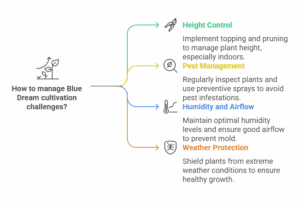
Outdoors, the usual garden pests like caterpillars or aphids might nibble on Blue Dream. Caterpillars can be particularly nasty because they chew through leaves and can even burrow into buds late in the season. Again, regular inspection is key. Many outdoor growers will periodically spray an organic insect control (like neem oil or BT for caterpillars) as a preventive measure. Also, consider physical barriers or netting if caterpillars are common in your area. Given Blue Dream’s relatively long outdoor growing season (it spends many weeks getting big before that October finish), you’ll want to stay on top of any bug that could make a meal of your plant.
Despite these considerations, don’t let the idea of pests or disease scare you off. Blue Dream’s challenges are pretty standard for any cannabis grow. In fact, many first-time growers pick Blue Dream because it generally handles stress and minor issues better than fussier strains. Think of it as a hardy garden plant that, while not invincible, gives you plenty of leeway to learn as you grow. With attentive care and a proactive approach, you’ll likely sail through the season with healthy plants.
A Grower’s Reflection: Where the Real Growth Happens
Growing Blue Dream can be a truly rewarding experience. This strain combines ease of growth with exceptional output – a rare and wonderful combo. Whether you’re nurturing just one plant in a closet or a whole patch of them under the sun, Blue Dream has a way of impressing you by the end. The plants are vigorous and beautiful, the care routine is straightforward, and the harvest is often downright bountiful. Plus, there’s something satisfying about growing a famous strain and discovering that yes, it really is as good as everyone says.
As an expert friend, I’ll happily tell you: go for it. Blue Dream is a solid choice for growers of all skill levels. With a little attention and love, you’ll likely end up with jars full of top-tier bud and a big smile on your face.
The Pot Line: Burning Questions:
What yield can I expect from Blue Dream?
Blue Dream is known for high yields. Indoors, you might harvest around 500–600 grams per square meter under ideal conditions. Even with a more basic setup, you can still expect a generous amount of bud. Outdoors, one plant can easily produce several hundred grams, especially if it has plenty of space and sunlight.
How long does Blue Dream take to flower?
Blue Dream’s flowering period is roughly 8 to 10 weeks, with many growers finding it finishes right around 9 weeks indoors. Outdoors, that typically means a harvest in early October (in the northern hemisphere). It’s a bit longer than some fast-finishing indica strains, but still quite manageable and well worth the wait.
Is Blue Dream suitable for beginner growers?
Yes. Blue Dream is often recommended to beginners because it’s relatively forgiving and hardy. It can handle minor mistakes in feeding or environment better than some fussier strains. As long as you manage its height and keep up with feeding and watering, even a first-time grower can do well with Blue Dream.
Can I grow Blue Dream indoors, or is it better outdoors?
You can do either! Blue Dream grows well both indoors and outdoors. Outdoors, it will naturally get very tall and yield big if you have a warm, sunny climate. Indoors, it still thrives, but you’ll need to train it (like topping and using a SCROG net) to control the height. Many indoor growers have great results with Blue Dream as long as they give it enough light and room to spread out.
How tall does Blue Dream grow?
It’s a tall strain. Outdoors in open soil, Blue Dream plants can easily exceed 6 feet (about 2 meters) in height. Indoors, if left untrained, they can stretch towards the ceiling, which is why training is recommended. With techniques like topping and bending, you can keep indoor plants shorter and bushier – often around 3–4 feet tall, depending on how long you let them vegetate.
Does Blue Dream need any special nutrients or feeding schedule?
Blue Dream doesn’t require anything exotic, but it does have a big appetite. Use a good quality nutrient program and be ready to feed on the heavier side compared to light-feeding strains. It particularly likes nitrogen during veg, so you might use a slightly stronger vegetative nutrient mix than usual. Just remember to ease up on feeding in the last couple of weeks before harvest (flush the soil with plain water) to ensure the smoothest flavor in your cured buds.
What pests should I watch out for when growing Blue Dream?
Keep an eye out for the usual suspects. Indoors, tiny spider mites can sometimes become an issue – they love hanging out on the underside of leaves. Check your plants regularly and address any mite sightings early with a safe pest control method. Outdoors, watch for caterpillars or aphids that might nibble on leaves or buds. Blue Dream isn’t exceptionally pest-prone, but its sweet aroma can draw pests if they’re around. Good garden hygiene and regular monitoring are your best defense.
Does Blue Dream have a strong smell while growing?
It develops a noticeable sweet, berry-like aroma, especially late in flowering. Early in the grow it’s mild, but as the buds fatten up, expect a rich blueberry scent to fill the area. If you’re growing indoors and need to be discreet, plan on using a carbon filter or other odor control because Blue Dream’s fragrance will definitely make itself known by harvest time.
When should I harvest Blue Dream for the best results?
Timing your harvest is important. If you’re growing outdoors, early October is usually the sweet spot to cut down Blue Dream (before autumn weather risks damage). Indoors, after about 9 weeks of flowering, start checking the trichomes on the buds with a magnifier. When most trichomes look milky white with a few turning amber, that’s an ideal time to harvest for peak potency and that signature Blue Dream effect – a nice balance of uplifting and relaxing.